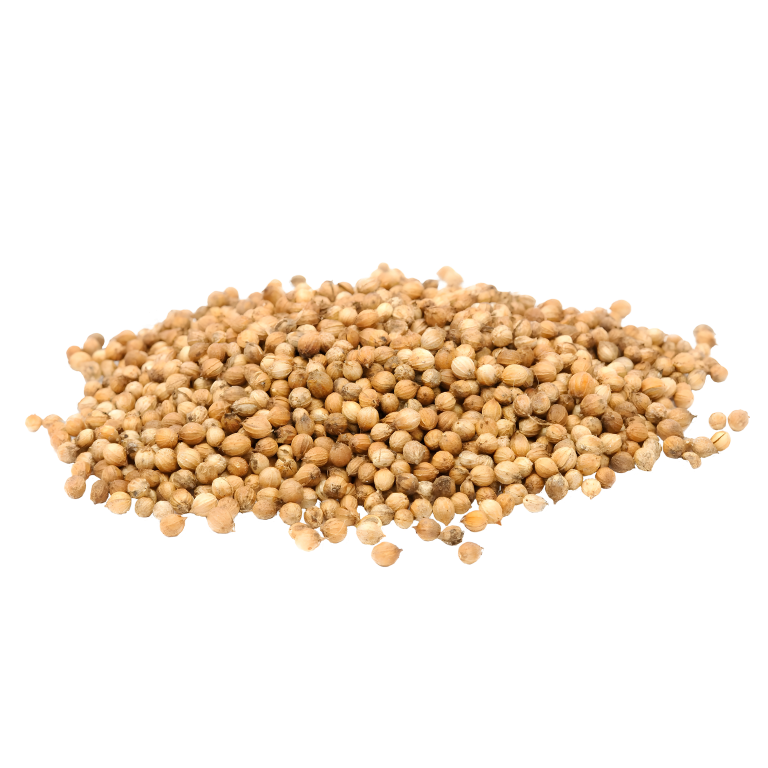
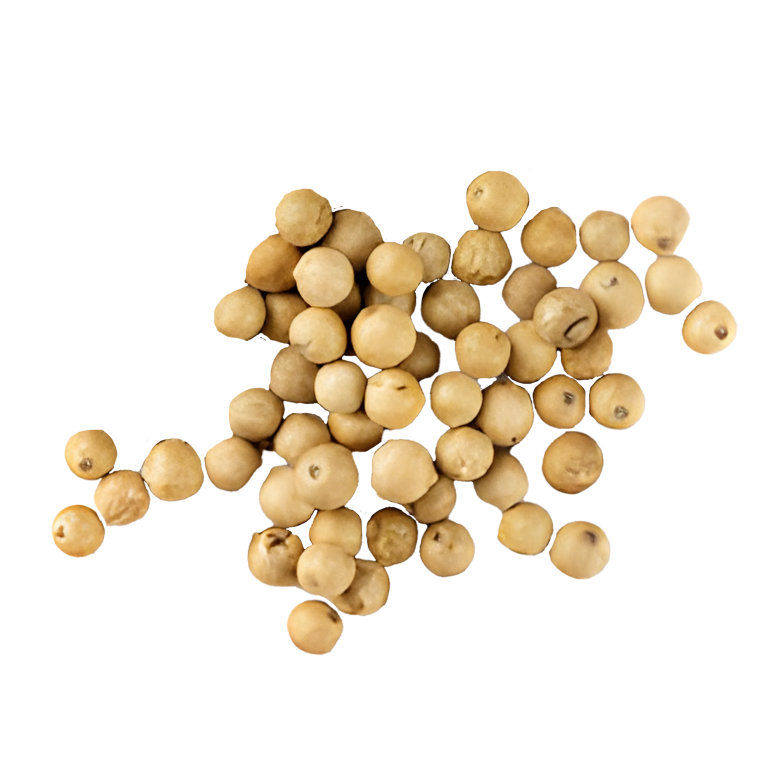
Coriander, Coriandrum sativumis an annual herb of the Umbelliferae family. It is a spice from the ripe, dried seeds of a herbaceous plant belonging to the Apiaceae family, the only spice of the genus Coriandrum. It is considered native to North Africa and Southern Europe.
It is usually marketed both as fresh leaves and dehydrated seeds, and is usually presented in the format of coriander whole grain, coriander crushed, coriander premium ground coriander or coriander premium ground coriander extradepending on its destination or type of application. The seeds give off a citrus aroma when ground. It is used as a condiment in a multitude of recipes and also in the food industry (meats, alcoholic beverages, etc.).
Its aromatic profile is warm, slightly citric and with a characteristic sweet touch that differentiates it from other spices of the same botanical group.
On a technical level, coriander is a natural source of essential oils such as linalool, responsible for its intense fragrance and stability in thermal processes. Its moisture content, granulometry and microbiological load are controlled by systematic laboratory analysis to ensure its suitability for professional food applications.

Coriander (Coriandrum sativum) is an indispensable spice in the food industry thanks to its unmistakable aromatic profile: warm, slightly citric and with sweet nuances. It is obtained from the dried seeds of the plant, selected and treated under strict quality and purity controls. This spice stands out for its versatility, its stability during cooking and its ability to enhance flavors naturally in multiple food applications.
Available in different formats depending on the type of process or final product, coriander adds value to both traditional formulations and innovative developments within the industry.
Whole grain coriander is the purest and most stable form of this spice. It is commonly used in liquid marinades, pickles, marinades and preparations that require a slow release of aroma. This format allows keeping its essential oils intact until the moment of application, offering greater control over the aromatic intensity in prolonged cooking or industrial processes at high temperature.
In addition, the whole grain retains its physical integrity, which facilitates storage and prolongs the shelf life of the product.
Ground coriander is used when a total and homogeneous integration is sought in dry mixtures, doughs or liquid products. It is ideal for sauces, marinades, meat preparations and quick cooking recipes, where an immediate and balanced aromatic contribution is desired.
This format ensures uniform flavor dispersion and ease of dosing in automated production lines. Granulometry is carefully controlled to suit each type of customer or formulation.
Crushed coriander falls between whole and ground coriander, offering an intermediate texture and a progressive release of its aromatic compounds. It is used in visual blends, such as toppings, snack seasonings, spicy batters and products that require both flavor and visual presence of the spice.
This format adds sensory value by allowing consumers to identify natural ingredients in the final product, reinforcing clean labeling and the perception of quality.
The use of coriander in the food industry offers multiple advantages:
In addition, coriander fits into sustainable product development strategies, as it is a 100% natural, allergen-free ingredient with multiple culinary applications.
Cilantro is used in a wide range of food products, including:
Depending on the type of product, you can choose between ground coriander for total integration, crushed for visual impact and moderate aroma, or whole grain for applications requiring stability and prolonged extraction.
© Paprimur 2026 – All rights reserved.