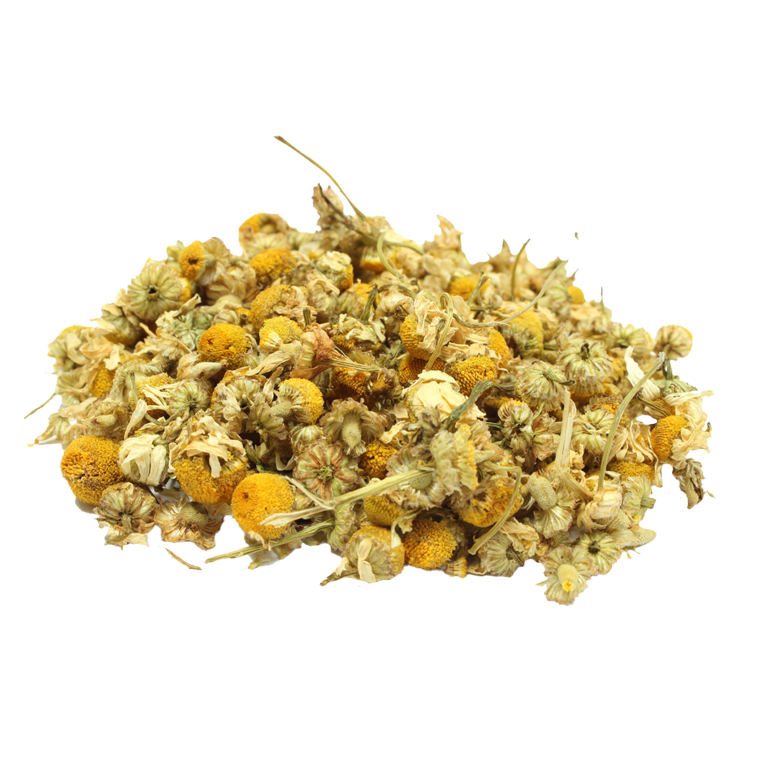
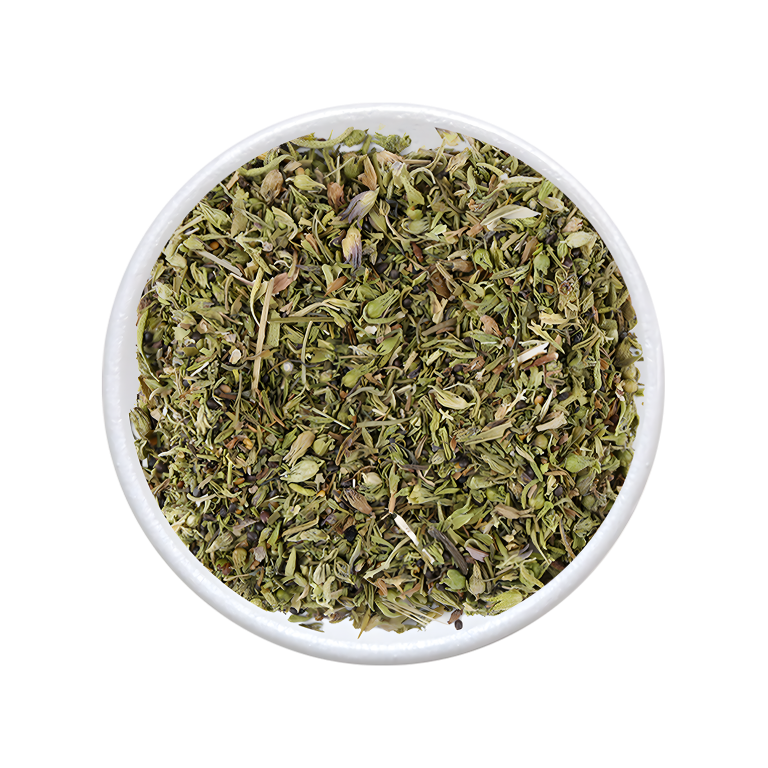
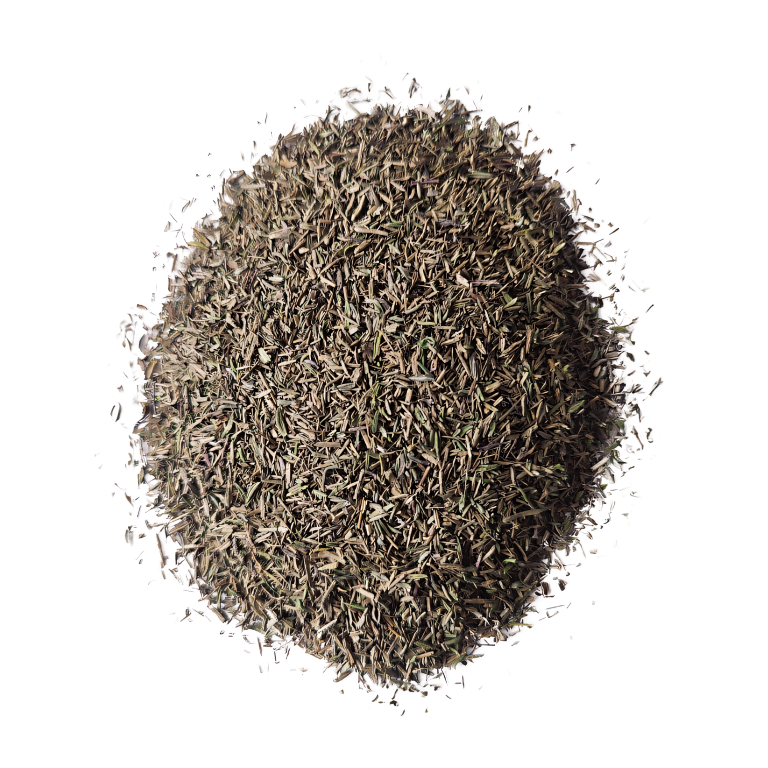
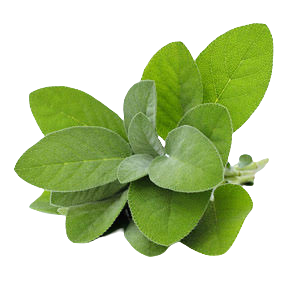
The bitter chamomile (Santolina chamaecyparissus) is an annual herb no more than 40 centimeters high, with a smooth and highly branched stem. Its intense green leaves are narrow and long. The flowers are located at the end of the twigs, forming a flower bud with a yellow head surrounded by white petals that once developed hang down.
Sweet chamomile (Matricaria chamomila) is an annual herb no more than 40 centimeters high, with a smooth and highly branched stem. Its intense green leaves are narrow and long. The flowers are located at the end of the twigs, forming a flower bud with a yellow head surrounded by white petals that once developed hang down.
The variety that grows in continental temperate zones has an optimum content of essential oils, meeting all the parameters established by current food safety regulations.
Characteristics of chamomile
- AppearanceFlower heads 5-8 mm, with yellow central disc and white ligule.
- CompositionContains essential oils (0.3-1.5%) with alpha-bisabolol, chamazulene, bisabolol oxides and flavonoids such as apigenin.
- Specifications: Moisture <12%, total ash 0.4%.
- Organoleptic profileSweet aroma, slightly fruity; slightly bitter taste.
- StabilityUnder suitable conditions it maintains properties for 24 months.
- CertificationMicrobiological analysis and pesticide control according to regulations.
Properties of chamomile
- AntioxidantFlavonoids act as free radical scavengers.
- Anti-inflammatoryAlpha-bisabolol and chamazulene inhibit inflammatory pathways.
- AntimicrobialInhibitory effect on certain pathogens.
- OrganolepticProvides distinctive aromatic notes to formulations.
- SolubilityActive components with moderate water solubility (65-80%) and better solubility in hydroalcoholic solutions (80-95%).
Benefits of chamomile
- SafetyLong-term use history, GRAS listed.
- StabilityMaintains properties after moderate thermal processes.
- CompatibilityExcellent synergy with other natural ingredients.
- TraceabilityComplete system from cultivation to final product.
- StandardizationConsistent active ingredient content between batches.
Uses of chamomile
- BeveragesHerbal tea: Fundamental component in infusions and herbal mixtures.
- AlimentariaNatural flavoring in confectionery, dairy and culinary preparations.
- TechniquesFlavoring agent and functional ingredient in various formulations.
- DosageDosage: 1-3% in solid preparations and 0.5-2 g/L in liquids.
LabelingDeclarable as "chamomile" or "chamomile extract" according to regulations.